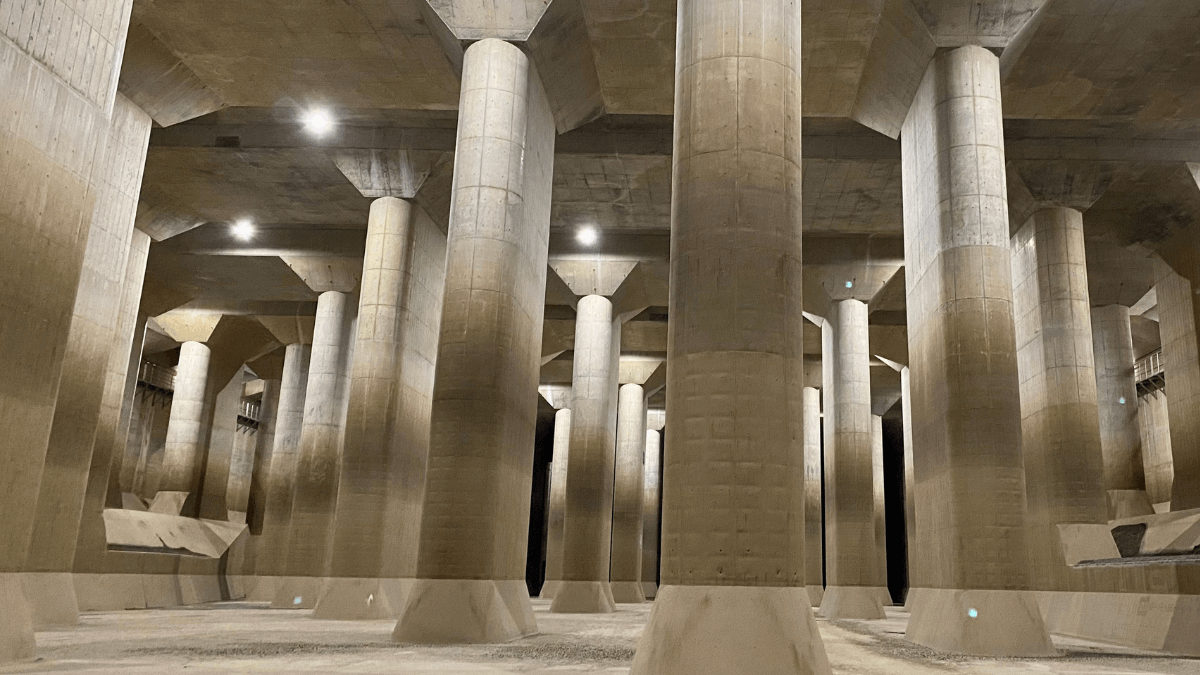
Tokyo is a bustling metropolitan area known for its modern infrastructure and towering skyscrapers, but beneath the surface lies a remarkable feat of engineering designed to protect its inhabitants from the dangers of flooding. The flood tunnels, often called Tokyo’s “underground cathedral,” are part of a vast system built to manage and redirect floodwaters away from populated areas.
This network stretches nearly four miles underground and includes massive water tanks, tunnels, and pillars that can withstand immense pressure. The five main vertical shafts, which act as entry points for floodwaters, are each around 230 feet deep, making them some of the deepest components of the system.
These structures come alive during heavy rainfall or typhoons, channeling water away to safeguard the city above. With over 100 rivers crisscrossing Tokyo, such infrastructure is vital for the safety and resilience of the metropolitan area.
The flood tunnels ensure the safety of millions of residents and demonstrate the city’s commitment to advanced and effective urban planning. As a testament to Tokyo’s ingenuity, this subterranean marvel underscores the importance of proactive measures in urban disaster management.
Engineering Behind Tokyo’s Flood Tunnels
The engineering behind Tokyo’s flood tunnels is a spectacle of modern construction. Key aspects include intelligent architectural design and overcoming various construction challenges.
Architectural Design of the Flood Tunnels
The tunnels are built to handle extreme water flow and feature robust designs. Engineers designed the Metropolitan Outer Area Underground Discharge Channel as the world’s largest underground floodwater diversion system. It spans over 6.3 kilometers and flows water through massive tanks and tunnels.
Inside, 500-tonne pillars support enormous ceilings, creating a cathedral-like design. These pillars ensure stability and distribute the weight evenly. Engineers incorporated pressure-adjusting water tanks to manage water levels during heavy rains.
Construction: Overcoming Challenges
Building such a large-scale project required overcoming numerous challenges. Engineers had to work beneath a highly populated metropolitan area. Advanced tunneling methods and machinery were essential.
Another significant hurdle was dealing with the area’s underground rivers. Engineers constructed additional reservoirs and flood tunnels to manage the water flow. Strategic planning ensured these constructions did not interfere with the city’s daily activities.
Careful coordination and engineering expertise helped Tokyo create a flood protection system that stands as a global example.
Functionality and Role in Disaster Prevention
Tokyo’s flood tunnels are essential for managing excessive water during heavy rains or typhoons, preventing urban flooding.
Water Diversion and Storage Capacity
The flood tunnels divert floodwaters away from city streets, moving water underground to help prevent overflow. Tokyo’s Metropolitan Area Outer Underground Discharge Channel (MAOUDC) can store vast amounts of water. The system includes large reservoirs and cylindrical chambers, reducing the risk of flood damage.
Strategically placed tunnels lead floodwater into storage areas. These reservoirs hold water until it can be safely released. Effective water diversion and storage protect residents and infrastructure.
Advanced Pumping Systems
The flood tunnels use advanced pumping systems to move water efficiently. These powerful pumps can handle large volumes. When heavy rains or a typhoon hit, the pumps activate automatically.
The pumps reduce flood risks by keeping water levels manageable. Power and telecommunication systems ensure pumps operate reliably. These robust systems are key to Tokyo’s disaster prevention strategy against floods.
Combining diversion, storage, and pumping creates a comprehensive flood prevention system.
Case Studies: Flood Tunnels in Action
Tokyo’s flood tunnels have been pivotal in protecting the city from floods, especially during extreme weather events. They mitigate flood damage and help maintain normalcy in urban areas even during heavy rainstorms.
Responses to Historic Weather Events
During Typhoon Hagibis in 2019, Tokyo’s flood tunnels played a crucial role. Huge amounts of rain poured down, causing rivers to swell dangerously. The Edogawa River was a major concern. The tunnels diverted excess water safely away from urban areas. This reduced the flooding in Saitama Prefecture and parts of Tokyo.
In another case, during a series of heavy rainstorms in 2016, the tunnels were activated multiple times. This quick action prevented major damage to infrastructure. Due to climate change, extreme weather events are becoming more frequent. Tokyo’s flood tunnels have become essential to the city’s defense mechanism.
Impact Assessment on Tokyo’s Urban Areas
The impact of these tunnels on Tokyo’s urban areas has been noteworthy. They have significantly decreased the risk of flood damage, making urban infrastructure much safer during storms. Reducing flood damage also translates to lower repair costs and less disruption to daily life.
The tunnels also provide peace of mind for residents of flood-prone areas. Knowing that a robust system is in place helps them feel more secure. This level of preparedness is especially important in a city with over 100 rivers.
Additionally, the tunnels support the city’s ongoing development by preventing disruptions. This allows for a more stable economic environment. These factors highlight the immense value of Tokyo’s flood tunnels.
Ancillary Benefits and Multipurpose Uses
The flood tunnels in Tokyo serve multiple roles beyond just flood control. They drive economic growth and urban development while attracting tourists fascinated by their engineering brilliance.
Economic and Urban Development Impacts
The construction of the flood tunnels has had significant economic and urban development benefits. They offer a unique form of multi-purpose utility tunnels (MUTs) that integrate various utilities in one accessible space. This setup reduces the need for frequent road excavations, decreases traffic congestion, and improves the quality of life for residents.
Due to these tunnels, various cities within the Tokyo Metropolitan Area, including Saitama, Kasukabe, and Edogawa, have seen improvements in utility management. Engineers and city planners can conduct maintenance activities all year round, irrespective of weather conditions. This promotes efficient infrastructure management, making these areas more attractive for investors and developers.
Boosting Tourism through Engineering Marvels
Tourism has also benefited from these flood tunnels. Described as an “engineering marvel,” the tunnels attract tourists from around the world. These visitors are fascinated by the scale and complexity of the infrastructure, located primarily in Saitama.
Not commonly known is that the main facility of the Metropolitan Area Outer Underground Discharge Channel, or G-CANS, features a giant hall supported by imposing pillars. Due to its majestic appearance, this structure has earned nicknames like the “Underground Parthenon” or “Underground Temple.” As a result, guided tours have become popular, bringing in tourism revenue while educating the public about advanced flood management.
Challenges and Future for Tokyo’s Underground Infrastructure
Tokyo’s underground infrastructure faces several challenges. These involve maintaining complex systems and adapting to climate change.
Maintenance and Operational Challenges
Due to their size and complexity, Tokyo’s flood tunnels require constant upkeep. The Metropolitan Outer Area Underground Discharge Channel (G-Cans) is a large system with vertical shafts and a long tunnel network. Modern engineering methods are essential but costly.
Regular inspections ensure the tunnels are clear of debris. During the rainy season, they handle extreme storm waters and prevent flooding in low-lying areas. Operational challenges also include staffing skilled workers for 24/7 monitoring.
Adaptations to Global Warming and Future Projections
Global warming is increasing storm intensity, so the G-Cans project must adapt to more frequent and severe weather. This involves forecasting future rain patterns and updating systems accordingly.
Japan aims to improve its underground reservoirs to handle excess water. Engineers plan enhancements to ensure resilience for the greater Tokyo area. Low-ground regions benefit most from these updates, reducing flood risks as global warming progresses.
Leave a comment