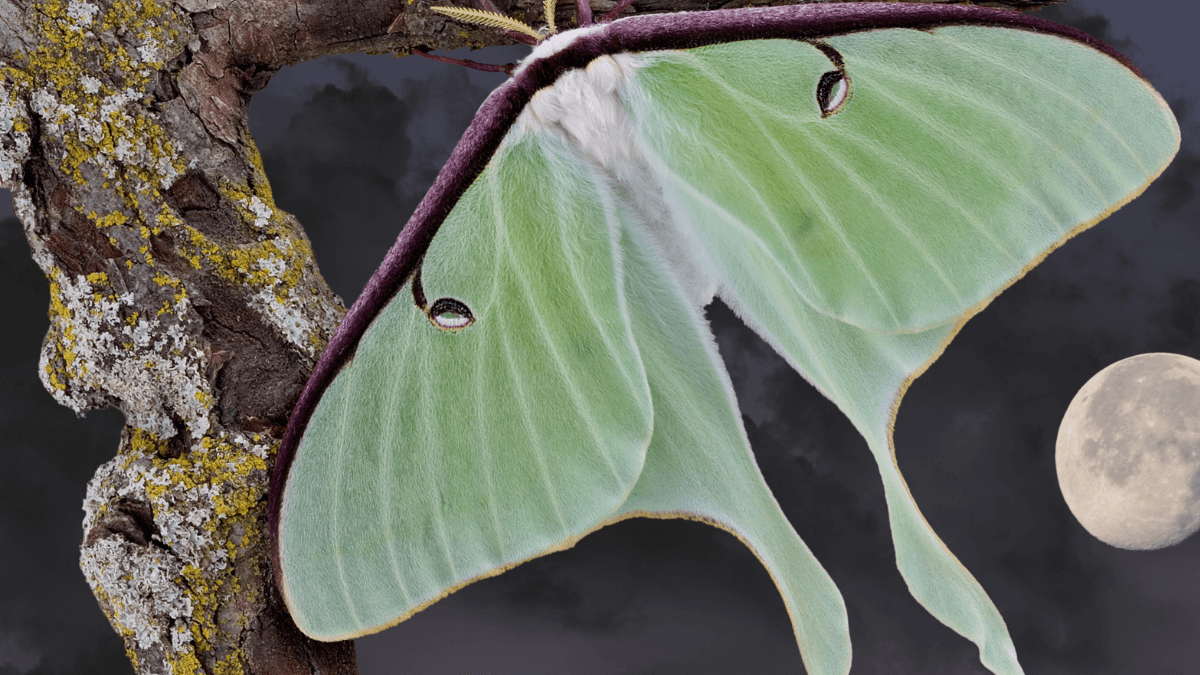
The Chinese Moon Moth (Actias dubernardi) dazzles with vibrant tails and patterns. Native to southern China, it shares traits with Actias ningpoana, showing the diversity of moon moths across Asia. Both are closely related to the Luna moth.
Their 70-85 day life cycle and use of pheromones for mating add to their nocturnal mystique, making them elegant guardians of the night skies.
The ingenious defense mechanism of the Chinese Moon Moth
The Chinese Moon Moth (Actias ningpoana) is known for its impressive size, with a wingspan that can extend quite far. Its wings’ long, curved tails help confuse predators, making it harder for them to target the moth during flight.
This species lacks functional mouthparts, meaning it doesn’t eat after emerging as an adult. While this might seem like a disadvantage, it helps keep the moth light and agile, allowing for quick escapes. The silken cocoon that protects it during its pupal stage is another defense.
A silk cocoon is a shield and a disguise, blending in with the surrounding environment to avoid detection. The Chinese Moon Moth sometimes uses aposematic coloration to warn predators of its unappetizing taste.
Their larvae have an interesting diet, favoring pine and other similar trees. By feeding on common trees, they ensure sustainable growth without drawing attention. This choice of food helps them develop into cold-hardy adults.
Hybrids between Actias ningpoana and other species like Actias selene exhibit similar evasive traits. These hybrids often share the morphological features that make them difficult for predators to catch. Together, these adaptations allow the Chinese Moon Moth to thrive and maintain its role as a guardian of the night skies.
The life cycle and behavior of the Chinese Moon Moth
The Chinese Moon Moth, part of the Lepidoptera order, has an intriguing life cycle that captivates scientists and nature lovers.
Eggs: The journey starts when the female moth lays tiny, round eggs. These eggs resemble small, translucent pearls. They usually hatch in about 10 days.
Caterpillar Stage: The larvae begin their lives as small caterpillars once hatched. This period, known as the larval stage, includes several growth phases called instars. In each new instar, the caterpillar changes color and appearance, often starting with a darker hue and becoming more vibrant as it grows.
Pupa Stage: After the caterpillar stage, the creature enters the pupa phase, forming its cocoon, often called a chrysalis. Here, the transformation from larva to adult occurs over several weeks, hidden from the outside world.
Adult Moth (Imago): Emerging from the chrysalis is the imago, or adult moth. The Chinese Moon Moth presents with stunning colors and long tails. Males and females differ slightly in color, with males showing brighter hues.
In the adult stage, these moths are active mainly at night. While they don’t feed, they have sensory organs to help navigate their surroundings. Their primary goal is to find a mate, continuing the life cycle amidst the night skies.
The ecological and cultural Significance of the Chinese Moon Moth
The Chinese moon moth, known scientifically as Actias dubernardi, is a striking member of the Saturniidae family. This moth is mainly found in the mountainous regions of China, especially in areas with a humid and cool climate. Its distribution sometimes extends into parts of India, Russia, and the Western Ghats.
These moths thrive in the wild, where they naturally depend on various Pinus species, such as Pinus massoniana and Pinus sylvestris. The black pine is also a favored host plant.
Their presence plays a crucial role in the ecosystem, as they participate in pollinating different plant species and maintaining balance in their habitats.
Culturally, moths in China are seen as significant symbols, often linked with the souls of lost relatives, believed to visit kin from the afterlife. The design and colors of the Chinese moon moth reflect its mystical and ethereal nature, drawing fascination and reverence.
French entomologist Charles Oberthür first described this remarkable moth in 1897. Related species, like Graellsia isabella, also share a place within the same Saturniidae family, contributing to ecological diversity.
In captivity, these moths require specific conditions that mimic their natural environments, ensuring their survival and well-being. Preservation efforts are vital to maintaining their presence, highlighting the delicate nature of these guardians of the night.
Leave a comment