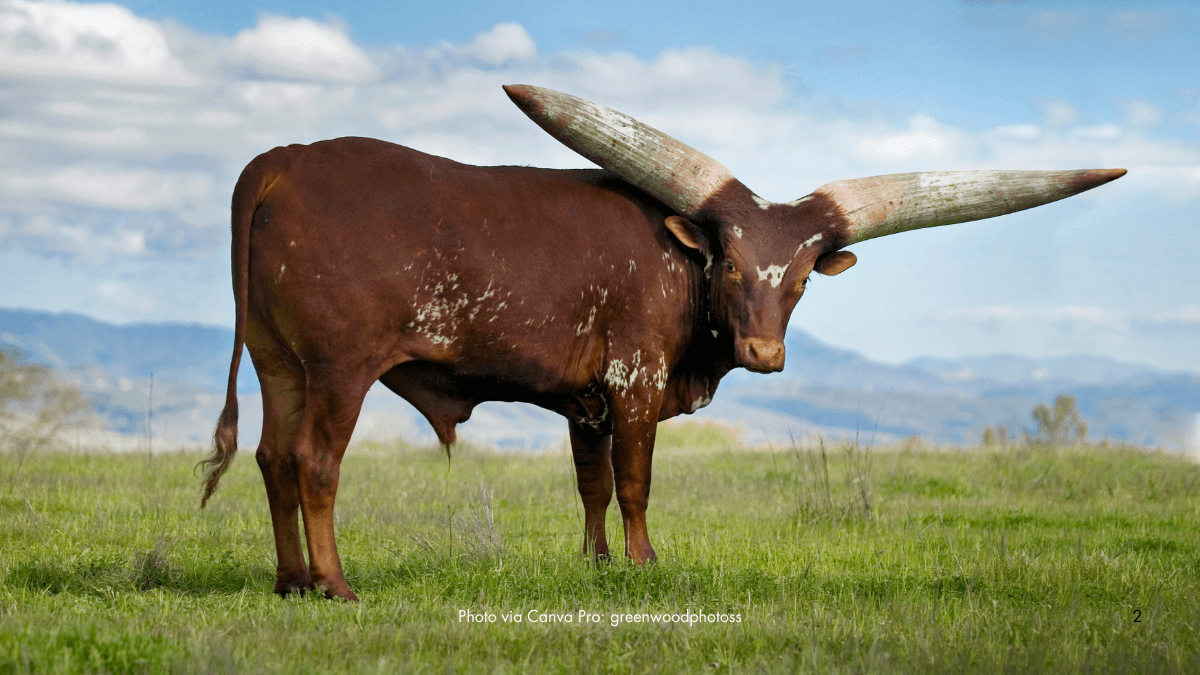
They appear almost otherworldly at first glance, towering against the sunbaked skyline. But there’s a down-to-earth story behind the enormous horns of the Ankole-Watusi, a breed of African cattle known for its long, thick, and surprisingly lightweight headgear. It’s a story shaped by harsh landscapes, cultural reverence, and the unrelenting need to keep cool in brutal heat.
Their horns can reach up to eight feet from tip to tip, an eye-catching size that has fueled countless questions. Are they meant to fend off lions, or do they serve a more practical purpose? Traditional herders have long admired these traits, often viewing them as symbols of wealth. Yet science reveals a deeper function.
According to the Ohio-based Farm at Walnut Creek, “Blood moving through the horns is cooled by moving air, and then flows back into the body and lowers the animal’s body temperature.” This means the horns act as natural radiators, dispersing excess heat and letting these animals thrive where other breeds might wilt.

Why Are They So Large?
Ankole-Watusi cattle evolved in parts of East and Central Africa where temperatures soar and water can be scarce. Their horns grew with these environmental pressures, creating a built-in cooling system through a honeycomb of blood vessels.
As warm blood flows into the horns, it’s cooled by the surrounding air before coursing back into the rest of the body. Though predators like lions still roam some of the same savannas, defense isn’t the primary driver of horn size.
Defensive behavior typically involves a protective circle formed by adult cattle around the young, but the horns themselves remain crucial deterrents if danger closes in. It’s the interplay of cultural preference and biological design that shaped the horns into the colossal structures we see today.

A Symbol of Strength and Survival
For traditional herders in regions such as Uganda and Rwanda, Ankole-Watusi cattle represent far more than just a source of milk or occasional meat. They’re living indicators of familial wealth and history, often passed down through generations.
Though crossbreeding has become more common to boost milk yields or meat production, many breeders and conservation groups work to preserve the pure Ankole-Watusi line, hoping to safeguard its iconic horns and remarkable heat-resistance.
These horns aren’t merely decorative showpieces. They’re part of an elegantly engineered survival mechanism, a silent testament to the cattle’s incredible adaptation under the blistering African sun. Gazing at them, you might think of far-off savannas, the clash of evolution and environment, and the age-old bonds forged between people and their livestock. In the end, the largest horned cattle on Earth remind us that nature is endlessly inventive, crafting solutions that help creatures flourish against all odds.
Leave a comment