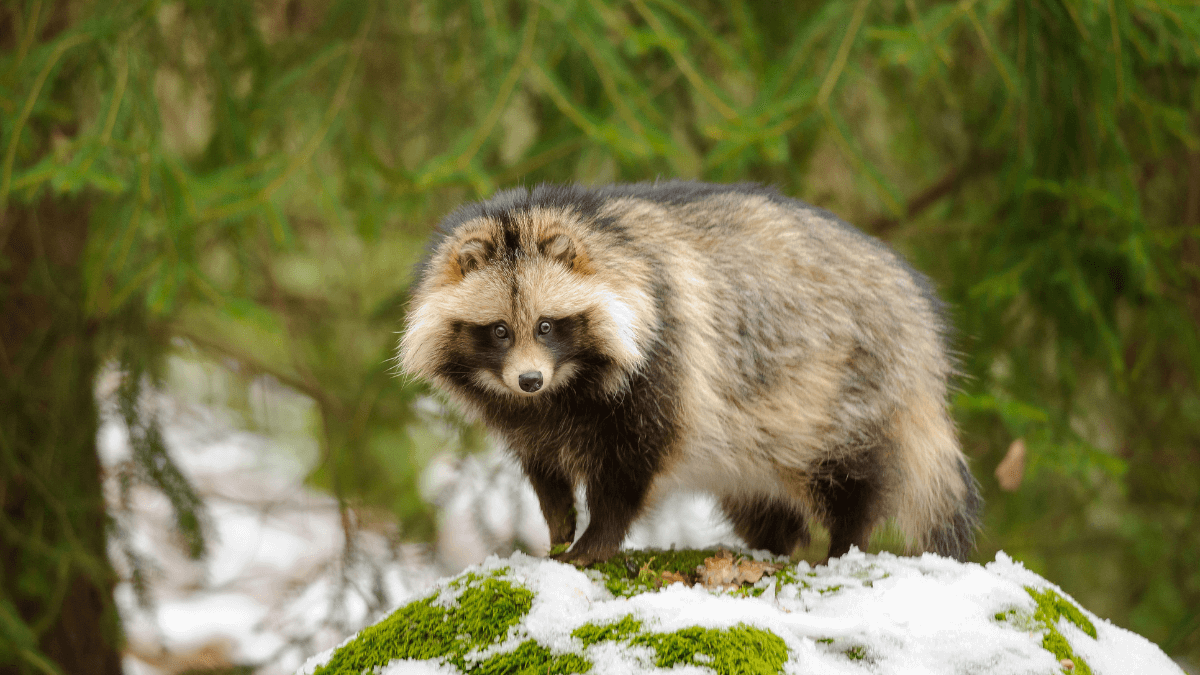
Raccoons and raccoon dogs share a striking resemblance, but their similarities are only skin-deep. These two creatures live entirely separate lives, inhabit different ecological niches, and carry distinct cultural and biological significance. Despite their shared masked appearance, they differ significantly in ancestry, behavior, and symbolism.
Are Raccoon Dogs Actually Dogs?

Yes, raccoon dogs are part of the dog family (Canidae), but they are not “dogs” in the way we think of domestic dogs. Instead, they belong to the tribe Vulpini, making them closer to foxes. Their name often misleads people into thinking they are hybrids or relatives of raccoons, but the truth is that raccoon dogs and raccoons are unrelated species.
A Closer Look at Taxonomy
Raccoons belong to the Procyonidae family, which includes animals like coatis and kinkajous. Native to North America, raccoons are famous for their dexterous paws and adaptability. In contrast, raccoon dogs hail from East Asia and belong to the Canidae family. Despite their name, raccoon dogs are more fox-like than dog-like, a fact reflected in their classification under the tribe Vulpini. This taxonomic divergence underscores their distinct evolutionary paths.
Physical and Behavioral Differences
Raccoons are medium-sized mammals with round bodies, bushy tails, and black-and-white facial masks. Their dexterity and intelligence make them excellent scavengers, particularly in urban environments. Raccoon dogs, on the other hand, are smaller and more compact, with thick fur and shorter legs. They lack the agile climbing ability of raccoons but have a unique trait among canids: they hibernate.

While raccoons enter a state of torpor in winter, raccoon dogs lower their metabolism and retreat into burrows, surviving months of cold with minimal activity. This hibernation behavior sets them apart as the only canid species known to do so.
Diet and Habitat
Both raccoons and raccoon dogs are omnivores, but their diets reflect their habitats. Raccoons thrive in diverse environments, eating everything from insects to human leftovers. Raccoon dogs, native to East Asia, primarily feed on fish, small rodents, and fruits. In areas where their ranges overlap, such as parts of Europe where raccoon dogs were introduced, their dietary habits diverge further based on availability.
Cultural Significance
In North America, raccoons are often seen as mischievous intruders or lovable symbols of urban wildlife. Indigenous legends portray them as clever tricksters, a role they have carried into modern media. Raccoon dogs, or tanuki, have an even deeper cultural resonance in Japan. Known as playful, shape-shifting tricksters in folklore, tanuki are depicted in art and stories as mischievous but benevolent creatures. They even inspired the Tanooki Suit in Nintendo’s Super Mario Bros. series and play a central role in Studio Ghibli’s film Pom Poko.
Misunderstandings and Conservation
The name “raccoon dog” creates much of the confusion between these two animals. Many assume they are hybrids or closely related, but their similarities are superficial. This confusion is amplified by pop culture, where characters like Tom Nook from Animal Crossing blur the lines between raccoons and tanuki.
Raccoons are thriving in North America and beyond, sometimes to the point of becoming invasive. Raccoon dogs, however, face a more complex situation. In their native range, they remain stable, but fur farming and habitat loss pose threats. Meanwhile, their introduction to Europe has caused ecological concerns, as they can outcompete native species and spread diseases.
Leave a comment