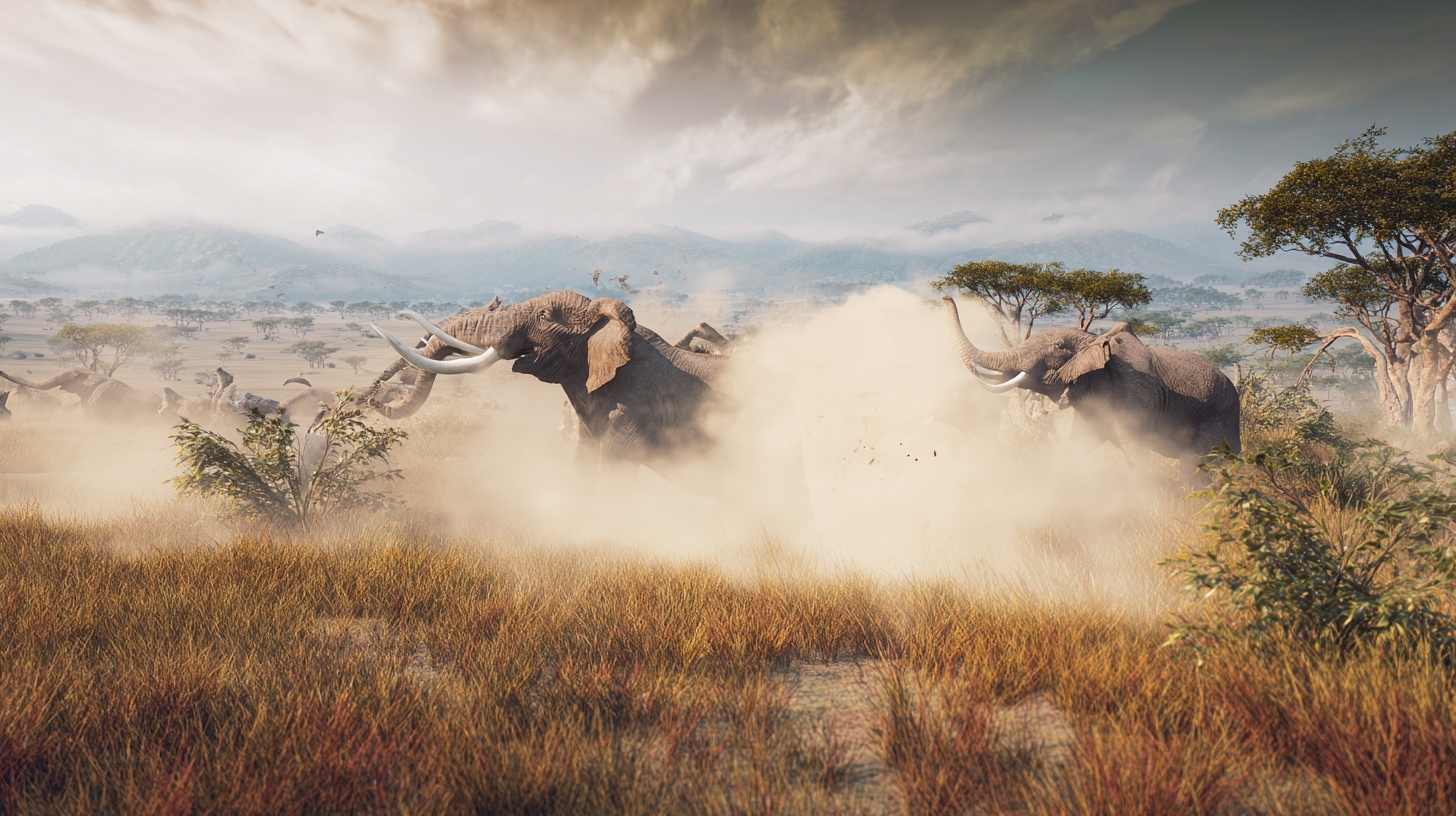
In May 2017, Theunis Botha, a prominent South African trophy hunter, led a group on a licensed safari near Hwange National Park in Zimbabwe. Botha, 51, had built a career guiding big-game expeditions and was known for using hounds to chase lions and leopards.
On that day, his group crossed paths with a breeding herd of elephants.
As the hunters moved forward, several cows charged to protect their calves. Botha fired his rifle, but another elephant came from the side.
Witnesses said she lifted him with her trunk. One of his companions shot the elephant, and as she collapsed, she landed on Botha. He died instantly beneath her weight.

What would it feel like if an elephant landed on you?
Elephants are the largest land animals on Earth. An adult weighs between 5,500 and 13,000 pounds, the equivalent of two or three cars.
If that much weight pressed down on a human body, bones would snap instantly, the ribcage would collapse, and vital organs would be crushed before nerves could even process pain.

If the elephant were falling or collapsing onto someone, the added momentum would multiply the damage. The victim would feel an immediate and unstoppable crushing pressure, much like being caught under a collapsing building or falling boulder.
Survivors of lesser trampling incidents describe the sensation as an “instant blackout,” with consciousness fading in seconds due to suffocation and shock.
Even if death weren’t instantaneous, the overwhelming compression of the lungs and diaphragm would make breathing impossible.
Within seconds, oxygen would be cut off, leading to dizziness, darkness, and rapid loss of awareness. In short, the experience would be more like being switched off than enduring prolonged pain.
Other times the hunt turned deadly
Botha’s death quickly spread across global news outlets. The image of a hunter killed by the very animals he pursued became a powerful symbol online.
Friends and colleagues remembered him as a seasoned guide and family man, while critics cast his fate as retribution. Headlines distilled it into a single phrase: the hunter became the hunted.

Weeks earlier, his friend Scott van Zyl had disappeared while hunting crocodiles along the Limpopo River. His belongings were found onshore, and DNA tests confirmed his remains inside a Nile crocodile.
Later that year, Argentine hunter José Monzalvez was killed in Namibia when an elephant charged while he was preparing to fire. He had secured the necessary permits, but the encounter ended in tragedy.
In August 2025, American rancher and hunter Asher Watkins died after being gored by a Cape buffalo in South Africa.
Weighing nearly a ton, the animal charged at high speed and fatally struck him. Guides often warn that Cape buffalo are among the most dangerous game animals, known for circling back on hunters.

Together, these incidents highlight a striking pattern. On rare occasions, animals pursued as trophies have turned on those pursuing them. Each event renews debate over trophy hunting.
Supporters argue that hunts provide money for conservation and rural economies. Critics counter that killing elephants, lions, or buffalo for sport undermines preservation efforts and sparks public outrage.
What’s clear is the enduring impact of these stories. Theunis Botha’s death, along with those of van Zyl, Monzalvez, and Watkins, continues to resonate in media and public conversation.
They serve as reminders that in the wild, the line between hunter and hunted can vanish in an instant.
Leave a comment