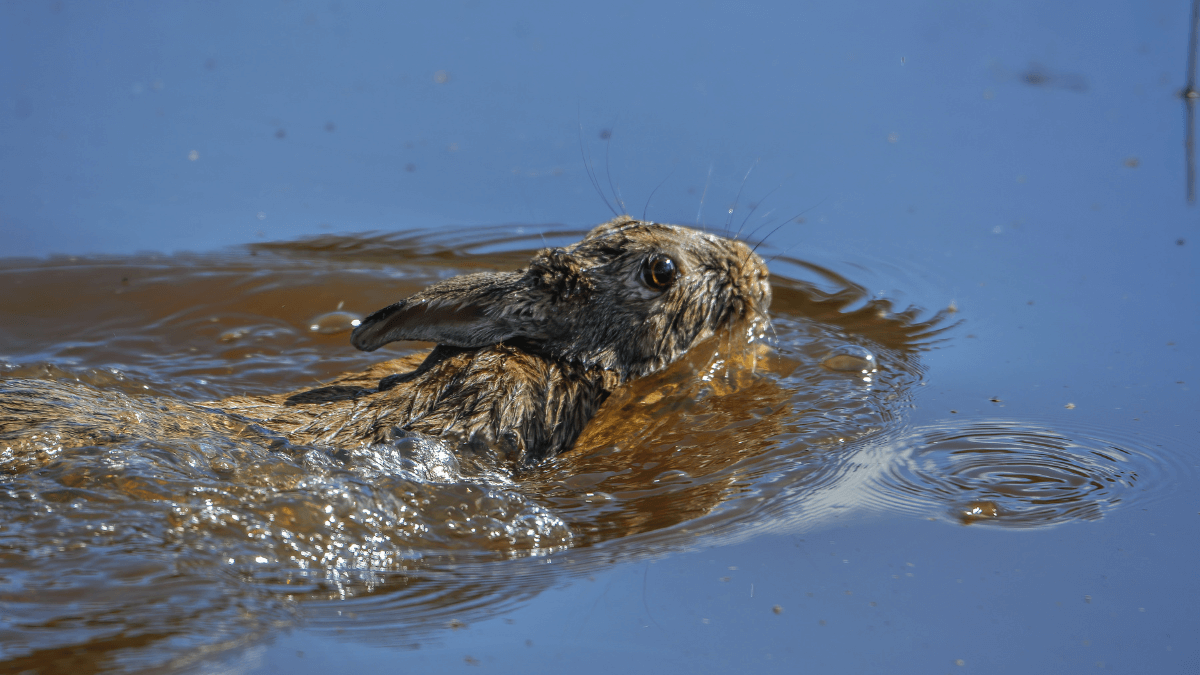
When you think of rabbits, you might picture them hopping around in meadows and gardens, not paddling through water.
While it’s not their preferred activity, rabbits do possess the ability to swim. This capability is primarily a survival instinct, and domestic rabbits rarely, if ever, need to swim.
If you ever find yourself in a situation where a rabbit is near water, note that although rabbits can swim, it is often a stressful experience for them.
They’re not as adapted to aquatic environments as ducks or fish are. Their fur coats absorb water, making swimming quite tricky and leading to a higher risk of hypothermia if they cannot dry off quickly.
It’s crucial to understand that while rabbits can swim, it’s not an activity they should engage in regularly or without necessity.
Rabbit Swimming Basics
While not commonly known for their swimming abilities, your rabbit can swim if necessary, often influenced by their survival instinct.
Rabbits possess strong hind legs primarily adapted for jumping and running rather than swimming.
Unlike aquatic animals, rabbits do not have webbed feet, making them less efficient in the water.
When swimming, rabbits use their legs to paddle, but this can be extremely stressful and tiring.
Their body temperature is another concern; maintaining it is critical, as getting wet can lead to a rapid loss of body heat, which can be dangerous for your rabbit.

Swimming Instincts and Responses
While rabbits have a survival instinct that may trigger them to swim if they feel threatened or need to escape predators, it’s not a preferred or natural behavior.
If introduced to water suddenly, a rabbit might instinctively start paddling, which can result in a high-stress response.
It’s crucial to understand that while rabbits can swim, it should not be assumed that they will do so willingly or that it is beneficial.

Safety and Risks for nautical rabbits
When considering whether rabbits can swim, it’s imperative to understand their capabilities, potential safety risks, and health concerns.
Rabbits may be physically able to swim, but doing so can expose them to various dangers and adversely affect their well-being.
Environmental Hazards
Swimming environments can pose numerous hazards for your rabbit. Unfamiliar or unsafe waters may lead to drowning if your rabbit panics or becomes exhausted.
Temperature is also a significant factor: extreme cold can result in hypothermia, while heat can cause heatstroke. Additionally, accidental ingestion of or exposure to polluted water can lead to sickness.
- Drowning: Strong currents or incapability to find an exit.
- Temperature extremes: Possibility of hypothermia or heatstroke in adverse conditions.
- Polluted water: Potential for ingesting harmful bacteria and substances.
Health Concerns
Swimming can cause serious health issues for rabbits. Wet fur leads to discomfort and may induce shock or heart attack from the stress.
Bacteria in water are a risk factor for infections, including serious conditions like respiratory infections or gastrointestinal stasis. After swimming, drying your rabbit thoroughly is crucial to prevent these ailments.
- Shock or Heart Attack: High stress causes severe physical reactions.
- Infections: Prolonged dampness or harmful pathogens causing illness.
- Gastrointestinal Stasis: Stress and cold temperatures contribute to this severe digestive condition.
Stress and Anxiety Factors
Swimming can induce stress and anxiety, leading to distress or panic movements that might cause injury.
Your rabbit’s instinctive behavior to freeze when sensing danger could be mistaken for calmness, masking their fear or potential for shock.
The presence of predators, even if not physically present, can also instigate a fear response that escalates the risk of harm.
- Panic and Injury: Frantic movements might lead to physical harm.
- Distress Indication: Misinterpretation of freezing behavior as calmness, whereas the rabbit could be experiencing high anxiety.
- Predator Presence: Fear of predators can heighten stress, risking the rabbit’s health.
The Do’s and Don’ts of Rabbit Swimming
Like pigs, rabbits are not natural swimmers and can experience stress when exposed to water. Therefore, it is crucial to ensure their safety and comfort when considering swimming activities.
Proper Introduction to Water
Introducing your rabbit to water should be a gradual and gentle process. Start with a shallow container filled with just enough water to wet their paws.
Gauge their reaction closely; if your rabbit appears stressed, it is best to avoid swimming altogether.
- Do: Begin with a shallow dish of clean water.
- Don’t: Force your rabbit into the water or start with a full swimming pool.
Best Practices for Supervision
Always supervise your rabbit closely during any water exposure. Ensure that no chemicals or soaps are present in the water which can harm their delicate skin.
- Do: Keep an eye out at all times and provide toys to make the experience more comfortable.
- Don’t: Leave your rabbit unattended or in a deep container where they can’t touch the bottom.
Post-Swimming Care
After swimming, your rabbit should be rinsed with clean water to remove any residue and dried thoroughly to prevent hypothermia, which can be done using towels or on a low setting with a hairdryer.
- Do: Ensure your rabbit’s fur is completely dry to maintain their body temperature.
- Don’t: Ignore dampness, especially in colder conditions.
FAQs and Rabbit Swimming Myths
Can bunny rabbits swim? Yes, certain wild rabbits, such as the swamp and marsh rabbits, are known to swim. They have waterproof fur and have been observed swimming great distances to escape predators.
Do domesticated rabbits like to swim? Unlike their wild counterparts, domesticated rabbits generally do not swim by choice. They may find it stressful and even dangerous if not supervised properly.
Is it safe to put my rabbit in a playpen with water? It’s not recommended to place domestic rabbits in water-filled playpens. They can become frightened or stressed, which may lead to health complications.
Should I bathe my rabbit? Rabbits are self-cleaning animals and typically do not require baths. If your rabbit gets dirty, consult your veterinarian for safe cleaning methods.
| Myth | Fact |
|---|---|
| Rabbits enjoy swimming | Wild rabbit species like swamp and marsh rabbits can swim, but most domestic rabbits do not enjoy it. |
| All rabbits can swim | While they may have the ability, not all rabbits should swim; it can lead to stress and health issues. |
| Swimming is a good exercise for rabbits | Exercise for domestic rabbits should be safe and low stress; consider a spacious playpen without water instead. |
Remember, whenever considering activities for your pet rabbit, consult a veterinarian to ensure their safety and well-being.
Leave a comment