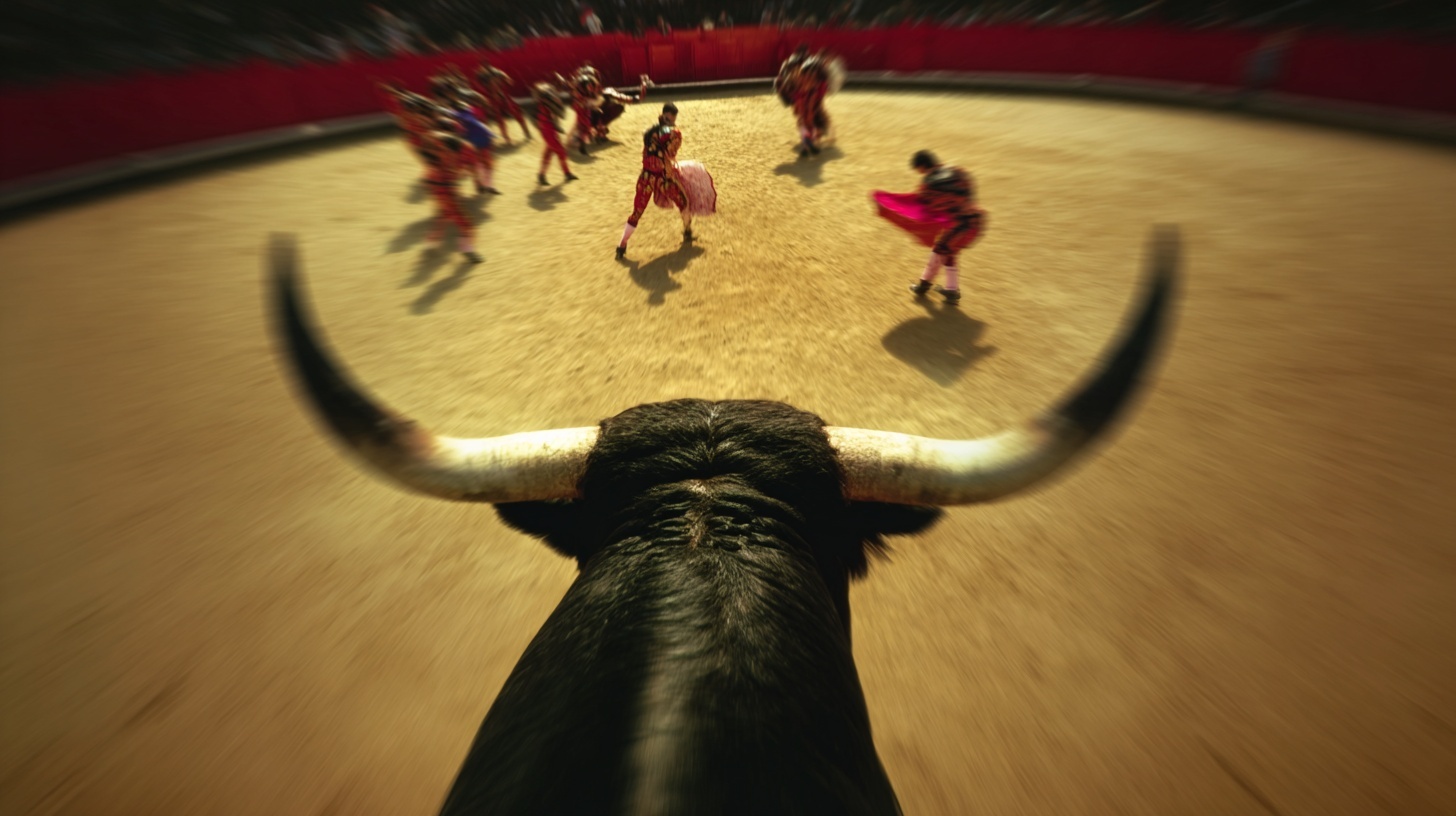
When Manuel Maria Trindade, a 22-year-old forcado making his debut at Lisbon’s Campo Pequeno arena, stepped into the ring on that summer evening, few imagined the tradition would turn so devastating. The bull, estimated at about 700 kg (around 1,540 lb), charged with such force that it lifted Trindade off his feet and hurled him into the arena wall.
Spectators froze in horror as fellow forcados scrambled into the ring, pulling at the beast’s tail and waving capes to distract it, yet they could not stop the momentum. Paramedics rushed in immediately. Trindade was declared brain dead after suffering cardiorespiratory arrest and passed away the following day at São José Hospital.
Aftermath and debate
The bull walked away. In Portuguese bullfighting, the animal is not killed in the arena. After the spectacle it is usually returned to its ranch, sometimes for breeding, or slaughtered out of sight. It survived while the tradition’s human cost claimed two lives that night: a 73-year-old orthopedic surgeon in the audience also collapsed and died, reportedly from an aortic aneurysm, though whether it was triggered by shock is unclear.
Trindade belonged to Grupo de Forcados Amadores de São Manços, one of Portugal’s most esteemed forcado troupes. It was his first appearance in the historic Campo Pequeno ring, which holds about 7,000 spectators. He followed in his father’s footsteps, honoring a family ambition anchored in ritual, courage, and cultural identity. For that reason his death resonated far beyond the bullring.
In the days that followed his passing, the debate around Portuguese bullfighting intensified. This is no new conflict, yet in the wake of such a personal loss it felt especially sharp. Animal rights groups and the political party PAN (People-Animals-Nature) renewed their calls for reform or outright abolition.
MP Inês Sousa Real labeled what happened an “abnormality that must stop,” pointing to the human toll and the still-present suffering of the animals. The public response included hate-filled commentary online, prompting Trindade’s mother, Alzira, to write an open letter that cut through the rhetoric with grief and defiance. “I want to thank you for all your applause, all the laughter and rejoicing at my son’s death. Did you know him well enough to be happy about his death? Do you know if he loved animals?” she demanded, before adding, “they handled [the bull] skillfully.”
Her words underscored the complex human dimension of the tradition, where families pour their trust and identity into what they consider pageantry rooted in centuries-old heritage. Portuguese bullfighting traces back to medieval times, with records dating to 1258 during King Afonso III’s reign and forcados first mentioned in 1661. The 1928 law forbade killing bulls in the ring and remains in effect in most of the country today. Exceptions exist in places like Barrancos and Monsaraz where tradition still allows it.
Yet the death of Trindade drew fresh attention to how lethal the sport can be even when the bull lives. His death echoed past incidents in other forms of bullfighting worldwide. In France a matador died after being gored; in Spain the tradition continues in many places but faces growing opposition.
Unlike in Spain, Portuguese fights may be bloodless but they are not painless or safe. PETA pointed out that “not bloodless” may be a misnomer, arguing that fatal injuries still occur, and even if the spectacle spares the bull from death in the ring, it does not spare the participants.
For a country that enshrines bullfights as part of cultural identity, the loss of a figure so young and promising is an unexpected shaper of public opinion. Already some municipalities have taken definitive stands. Póvoa de Varzim banned bullfighting and demolished its historic arena, reopening the site as a multi-use venue to reflect changing priorities and a decline in interest. Could Campo Pequeno follow? The September 5 show scheduled with Peru’s world-renowned bullfighter Andrés Roca Rey loomed as a test of public tolerance.
In the end the night revealed two dangers, one from a bull, and another from our inherited traditions. Manuel Maria Trindade walked into the ring wanting to uphold an art, a legacy, and a dream. That dream ended abruptly against the arena wall, and now his death echoes far beyond Lisbon, forcing everyone to ask difficult questions. Was it worth the risk? Who bears responsibility? And how many more young lives must be sacrificed in the name of custom before Portugal decides whether the tradition should continue, change, or fade?
Leave a comment