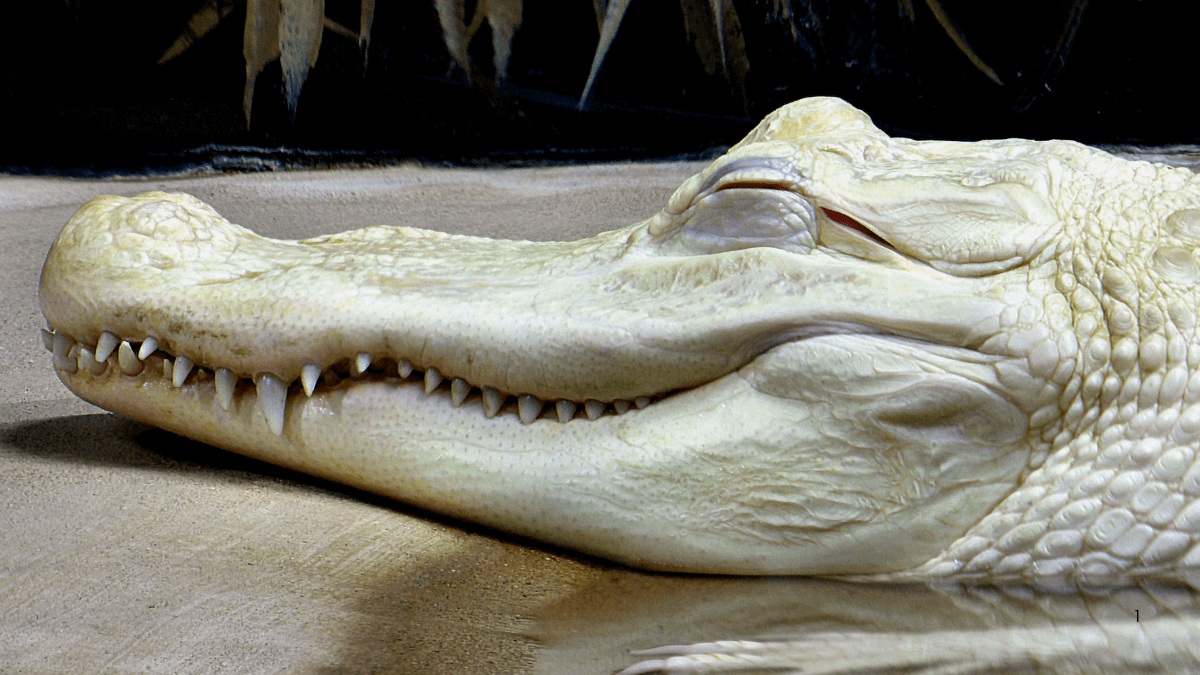
Ghostly pale, pink-eyed, and almost mythical in appearance, albino alligators are among the rarest reptiles on Earth. Unlike their dark, swamp-blending cousins, these ivory-colored anomalies seem plucked from fantasy, sparking both scientific curiosity and public awe.
But their unusual beauty comes at a cost: extreme sensitivity to sunlight, lack of camouflage, and challenges that make their survival in the wild nearly impossible.
Albinism in American alligators results from an autosomal recessive mutation that prevents melanin production. Two carrier parents must pass on the gene, and the condition occurs in roughly one in 75,000 alligators.

These animals exhibit ivory-white skin and pink eyes because the blood vessels beneath their transparent skin and irises are visible. Leucistic alligators, by contrast, produce some melanin; they retain patches of darker pigment and have blue eyes.
Survival in the wild vs. captivity
Estimates of the global albino alligator population vary, but most experts agree there are fewer than 200 individuals, with some sources suggesting only 100–200 worldwide. Their extreme rarity makes them conservation symbols and crowd-drawers at zoos and aquariums.
In the wild, albino alligators face enormous challenges. Without camouflage, they are easily spotted by predators and prey. Their lack of melanin leaves them vulnerable to sunburn and eye damage. Consequently, very few survive to adulthood.

Most known albino alligators live in carefully controlled environments like Gatorland in Florida or the California Academy of Sciences. Filtered sunlight, shaded enclosures, and attentive caretakers dramatically reduce the risks they face in captivity.
Their basic diet is the same as that of their pigmented counterparts: fish, turtles, birds, and small mammals. Researchers have observed American alligators occasionally eating wild grapes, elderberries, citrus fruits, and other berries.
This behavior, which isn’t unique to albinos, may provide nutritional supplements and aid in seed dispersal.
Because so few exist, albino alligators have become ambassadors for wetlands conservation. Famous individuals include Claude at San Francisco’s California Academy of Sciences, hatched in 1995 and weighing around 170 lb.

Facilities like Gatorland’s White Gator Swamp house both albino and leucistic alligators. These venues help educate visitors about genetics, species protection, and the challenges faced by reptiles in a changing environment.
Beyond their ghostly appearance, albino alligators remind us how rare beauty and fragility often go hand in hand. Their survival depends on a balance of human stewardship and continued awareness of the ecosystems they represent.
Leave a comment