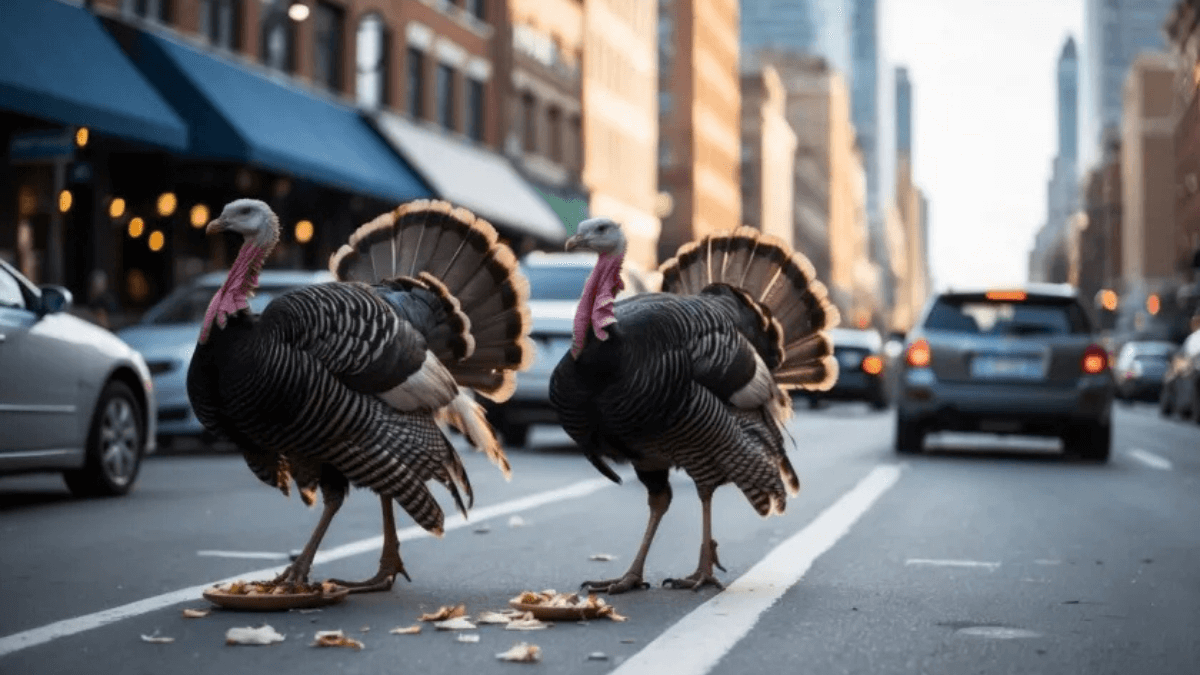
Urban turkeys have become an unexpected yet increasingly familiar presence in many cityscapes. Their unmistakable forms—awkward yet regal, prehistoric in their strut—punctuate the neatly trimmed edges of suburban lawns, schoolyards, and bustling intersections.
These wild birds, long associated with woodlands and open fields, are navigating a world of asphalt and concrete with a resilience that mirrors urban ecosystems’ adaptability. Here are eight ways these remarkable birds make city life their own.
PS. It’s Thanksgiving. We hope you don’t mind the humor.
1) Turkeys Navigating City Traffic
Urban turkeys are surprisingly adept at navigating city traffic. Although these birds can often be seen wandering near busy roads, they have developed ways to avoid accidents.
They tend to use crosswalks and medians for safe passage, mirroring pedestrian habits.
Turkeys often move in groups, which makes them more visible to drivers. Their flocking behavior helps them negotiate traffic, reducing the risk of being hit by vehicles. They also take advantage of quieter times, such as early mornings, to cross roads without much interference.
Urban turkeys learn from their experiences and adjust their routes. They avoid areas with frequent traffic jams where they might get trapped or scared. Over time, turkeys in cities become better at choosing safe paths.
Interestingly, turkeys are also known to adapt to human behavior. They become familiar with traffic signals and may hesitate when lights change. This cautiousness likely aids their survival in bustling urban settings.
2.) Roosting on Urban Rooftops

Urban turkeys have found an innovative way to adapt to city life by roosting on rooftops. These elevated spaces offer a safer resting place away from the chaos below. The height provides a vantage point to spot potential predators and disturbances.
Roosting on rooftops also keeps turkeys away from ground-level threats like traffic and human activity. Being high up allows them to rest undisturbed while maintaining a clear view of their surroundings. This adaptation is crucial in busy urban areas.
Certain rooftops, like those with vegetation, mimic natural habitats, making them even more appealing to turkeys. Green roofs can provide a touch of nature amidst the urban sprawl. This offers an additional benefit by providing some natural cover.
With urban expansion, turkeys demonstrate resilience by making use of available resources. Their ability to find suitable roosting spots on rooftops is one example of how wildlife can adapt in urban settings.
3) Scavenging in Urban Parks
Urban turkeys are skillful scavengers, taking advantage of the abundant food available in city parks. These areas offer a variety of food sources, such as discarded snacks from park visitors. This availability of food helps turkeys thrive in urban environments.
Parks often have grassy areas with insects and worms. Turkeys search through the grass, benefiting from this natural food supply. Occasional roadkill or food scraps also contribute to their diet.
Urban parks can support a stable turkey population by providing natural and human-provided foods. As a result, turkeys have learned to make use of every available resource. This adaptability is key to their survival in cities.
4) Foraging in Community Gardens

Urban turkeys have found new opportunities in community gardens. These green spaces are often filled with plants, fruits, and insects that turkeys can eat. This variety of food sources makes gardens attractive places for foraging.
Turkeys are ground foragers who search for food by scratching at the dirt. Their presence in community gardens can help with pest control by eating insects. Turkeys move from garden to garden, spreading seeds and aiding plant growth naturally.
Their low flight ability means turkeys often stay in areas like gardens where they feel safe. Garden environments allow them to forage with less disturbance from city life. Community gardens benefit from these natural visitors while providing the birds with a sustainable urban habitat.
5) Avoiding City Predators
Urban turkeys have learned to avoid various city predators, relying on their keen senses and adaptability. They often exploit natural and man-made structures for protection.
For instance, they may roost in trees or buildings at night to stay out of reach from ground-based threats.
Noise and the presence of people can also deter predators in urban environments. Turkeys benefit by adjusting their habits to be more active with increased human activity. This overlap in human presence can help lessen the risk of predator attacks.
Predation by domestic animals like cats poses a different challenge. Urban turkeys tend to flock together, which can provide safety in numbers. This behavior can help them spot and react to threats more quickly. By staying alert and vigilant, turkeys can successfully evade city predators.
6) Following Garbage Collection Schedules
Urban turkeys have adapted to city life by learning the local garbage collection schedules. These birds are aware of when trash and organic waste are placed outside and use it as a food source.
Turkeys often flock to areas where garbage is set out before it is collected. This helps them find meals quickly and easily. In addition to natural foraging, they rely on leftover human food.
The ability to recognize these patterns shows their intelligence and adaptability. Turkeys have an impressive knack for surviving and thriving in urban environments. Watching for collection times is one of the many ways they have adjusted to city living.
7) Commuting on Public Transport
Urban turkeys, like other city dwellers, have found ways to navigate city environments. One method they use is traveling on public transport.
This mode of travel is not unique to humans and may be just as convenient for wildlife adapting to urban life.
In bustling city centers, turkeys have been observed near transport hubs. These areas offer turkeys access to food and shelter. Being near public transport also allows them to explore different parts of the city, hopping on and off buses and trains.
Turkeys are often seen avoiding peak commute hours when public transport is crowded. This may suggest they have learned to time their movements for calmer periods, making their journeys less stressful. Such behavior points to their increasing adaptability in urban settings.
8) Adapting Communication with Noise
Urban turkeys face noisy environments filled with the sounds of traffic, construction, and bustling crowds. To thrive, they have developed unique communication methods that help them interact despite the noise.
City turkeys often change their call volume or pitch to make themselves heard more clearly.
These adjustments help them convey important messages within their groups. By modifying their calls, turkeys can warn each other about potential dangers or attract mates. This adaptability ensures they maintain social structures and safety.
In addition, turkeys may use visual cues like body language to communicate. This nonverbal interaction becomes crucial when sound is ineffective. Signals such as head movements or feather displays help turkeys communicate needs and intentions.
Leave a comment