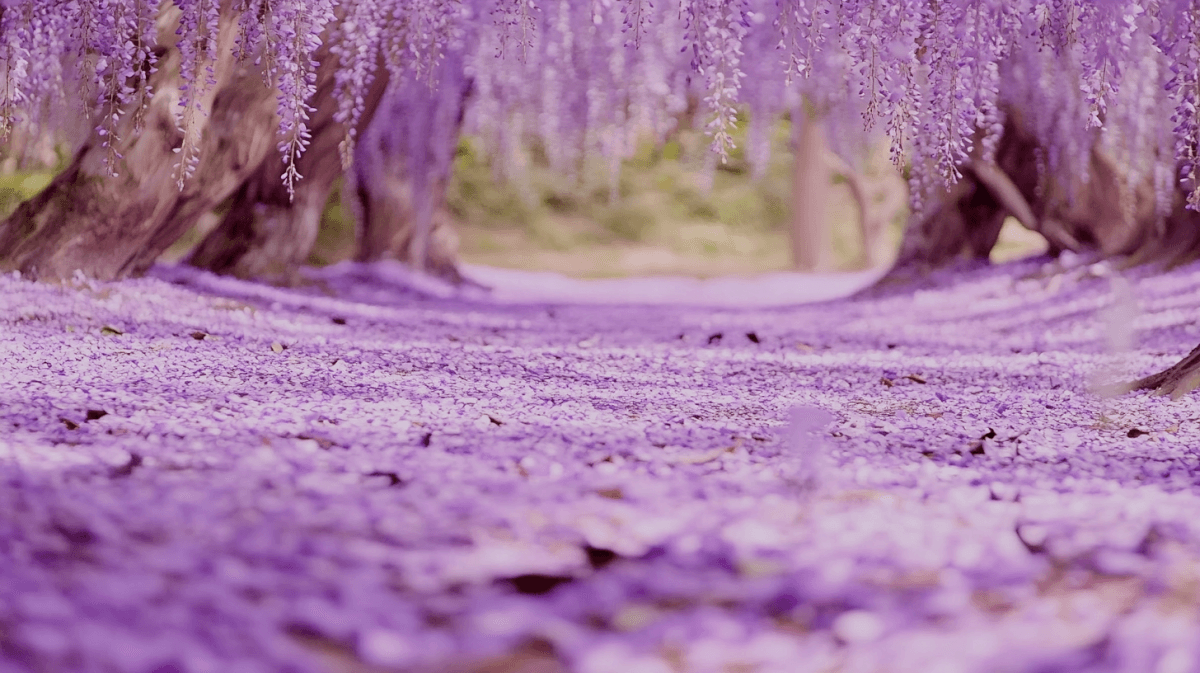
Japan is known for its enchanting floral displays, and wisteria blooms are among the most unforgettable. These delicate, trailing flowers, called fuji in Japanese, drape elegantly over trellises and tunnels, creating a scene that feels like a springtime dream.
Visiting wisteria gardens in Japan is a chance to witness nature’s artistry in vivid shades and intricate shapes. From lush gardens to historic sites, these locales showcase the splendor of wisteria, making them must-visit destinations for anyone drawn to the beauty of springtime blossoms.
1) Kawachi Fujien Wisteria Garden
Kawachi Fujien Wisteria Garden, in Kitakyushu, is a private sanctuary renowned for its breathtaking wisteria spectacles. Tucked into wooded hills, it bursts into color each spring when the blossoms reach their peak.
Two tunnels, each about 328 feet long, are formed entirely by wisteria. The flowers hang in cascading clusters of purple, white, pink, and blue, surrounding you in an almost surreal glow. Outside these tunnels, domes and trellises brim with even more blooms.
The founder, Higuchi Masao, envisioned a place where people could experience wisteria in its purest form. Today, more than 150 wisteria plants reflect that dream. The garden opens to the public in spring for wisteria and again in autumn for maple leaves. It remains a must-visit spot for flower enthusiasts and travelers craving a vivid floral escape.
2) Ashikaga Flower Park
Ashikaga Flower Park, in Tochigi Prefecture, is famed for its gorgeous floral displays. Covering about 94,000 square meters (over 1 million square feet), this popular park pulls in over 1.5 million visitors yearly.
The wisteria season typically runs from mid-April to mid-May. During those weeks, trellises adorned with pink, purple, and pale lavender blooms transform the park into an otherworldly scene. It’s no surprise that many travelers make the trip from Tokyo, which is just a convenient train ride away.
Apart from wisteria, Ashikaga Flower Park hosts rotating floral themes that change with the seasons. Whether you’re there for a day trip or a longer stay, you’ll find dining options and souvenirs that let you take a piece of the experience home.
3) Byakugō-ji Temple
Byakugō-ji Temple in Nara offers another mesmerizing springtime display. Its wisteria clusters, sometimes over 3 feet long, captivate visitors worldwide. They’re at their best in mid-to-late April, when the temple hosts the Kyushaku Wisteria Festival.
Illuminations at night heighten the magic, and you’ll stroll beneath these fragrant blooms in an atmosphere that feels timeless. The temple itself is more than 1,300 years old, and its historic presence adds depth to the experience. You can drive to the site, though parking fills up quickly during the festival.
4) Tennogawa Park Wisteria Festival

Tennogawa Park, located in Aichi Prefecture, hosts an annual wisteria festival from late April to early May. This event attracts visitors who come to admire the long, hanging clusters of wisteria blossoms. The flowers drape over trellises, forming a breathtaking display of cascading petals.
The park, often called “Wisteria Village,” boasts about 114 wisteria plants in hues of purple and pink. Trellises stretch for about 902 feet, creating a floral canopy that draws families, couples, and tourists to celebrate spring’s arrival. Food stalls and activities add to the festive energy, while the subtle fragrance of the blossoms infuses the air with a calming sweetness.
5) Kameido Tenjin Shrine
Kameido Tenjin Shrine, in Tokyo, is one of the city’s most cherished spots for viewing wisteria. When the flowers reach their peak in April, visitors gather to watch the trailing clusters reflect on the shrine’s pond.
The shrine dates back to the Edo period, and its wisterias inspired classic ukiyo-e prints, such as “One Hundred Famous Views of Edo.” During the wisteria festival, you’ll find food stalls and evening illuminations that cast a glow over the blossoms.
Kameido Tenjin honors Sugawara no Michizane, a revered scholar and politician. For anyone in Tokyo during spring, this stop offers a wonderful glimpse into Japan’s natural beauty and cultural significance.
6) Kasuga Taisha Shrine
Kasuga Taisha Shrine is a remarkable site in Nara, dating back to 768. Surrounded by ancient trees and historical landmarks, it’s a must-see spot for travelers interested in both culture and nature.
One of its highlights is the Manyo Botanical Garden, home to over 200 wisteria plants. These blooms, in shades of white, pink, and deep purple, erupt in color beneath the shrine’s bright red buildings. The garden also includes plants mentioned in the Manyoshu, Japan’s oldest poetry collection.
Many visitors pair Kasuga Taisha Shrine with Nara Park, famous for its free-roaming deer. Combining cultural exploration with a stroll among blossoming wisteria makes for an unforgettable day.
7) Ushijima-no-Fuji Wisteria Park
Ushijima-no-Fuji Wisteria Park in Saitama provides a peaceful alternative to the busier gardens. Here, ancient wisteria trees, some over 1,200 years old, create a spectacular display of long, cascading blooms. The site, also called Tokaen, features trellises supported by roots with circumferences exceeding 30 feet.
From the observation platform, you can survey the entire park, taking in the sea of purple petals that stretch across the trellises. Ushijima-no-Fuji is roughly one to 1.5 hours from Tokyo, making it a convenient yet quieter retreat for those hoping to skip the bigger crowds.
The History of Wisteria in Japan
Wisteria has played a meaningful role in Japanese culture for centuries. It’s admired for its delicate blossoms, but it also carries deep cultural significance, woven into traditional textiles and artworks.
Cultural Significance
Known as fuji in Japan, wisteria has been celebrated in festivals and poetry for generations. The plant’s fibers were once used to create Fuji-fu (wisteria cloth), a noteworthy cultural artifact designated a tangible cultural property in 1991.

Wisteria motifs appear frequently on tea ceremony utensils, and in classical Japanese verses, they often symbolize elegance. Across the country, wisteria festivals honor this heritage, attracting locals and tourists eager to witness the blossoms’ fleeting charm.
Symbolism in Japanese Art
In Japanese art, wisteria symbolizes beauty, love, and longevity. It appears in ukiyo-e woodblock prints and traditional paintings, where its sweeping vines represent devotion and familial ties.
These graceful blooms, cascading from trellises, embody a sense of harmony. The delicacy of wisteria resonates with an aesthetic that values balance, and its presence in art underscores its enduring importance in daily life.

Botanical Aspects of Wisteria
Wisteria is a climbing plant prized for its vibrant clusters of blossoms and twisting vines. Its various species differ slightly in hue, fragrance, and growth patterns, all of which add to its appeal.
Wisteria Varieties in Japan
Japan’s most popular wisteria species include Wisteria floribunda (Japanese wisteria) and Wisteria brachybotrys (Silky wisteria). Japanese wisteria produces long, drooping clusters in vivid purples, while Silky wisteria features shorter blooms in softer shades of lavender and white.
Colors can range from pink and purple to white and even pale blue. Each variety offers its own unique qualities, but they all share the power to enchant visitors who come to admire their colorful drapery.

Seasonality and Blooming Patterns
Wisteria typically flowers in early spring, peaking between late April and early May. This spectacular display is relatively short, often lasting just a few weeks. Weather patterns can shift the precise bloom times, with warm but not scorching days producing more abundant flowers.
Northern regions may bloom later due to cooler temperatures, while southern areas enjoy earlier blossoms. If you plan a visit, timing is crucial. Catching wisteria at its height allows you to step into a world awash in cascading petals.
Additional Travel Tips
- Advance Tickets and Reservations:
Places like Kawachi Fujien Wisteria Garden often sell timed tickets online, especially during peak bloom. Book early if you want a guaranteed slot. - Best Times of Day to Visit:
Early mornings on weekdays are usually less crowded. You’ll also get softer light for photography, which can be enchanting as the sun filters through the blooms. - Transportation Options:
- Kawachi Fujien: Accessible by shuttle bus from JR Yahata Station during peak season. Driving is possible, but parking can be limited.
- Ashikaga Flower Park: Located near Ashikaga Flower Park Station on the JR Ryomo Line, making it a convenient day trip from Tokyo.
- Kameido Tenjin Shrine: Within Tokyo’s city limits, reachable via local trains (e.g., JR Sobu Line to Kameido Station).
- Illumination Events:
Some gardens and shrines offer night illuminations. Check official websites for schedules, since viewing wisteria under soft lantern light can be magical. - Local Etiquette:
In crowded gardens or temples, move slowly and avoid blocking pathways. If you’re taking photos, be mindful not to touch or damage the vines.
Leave a comment